
Countdown to Submission Deadline
- 00 DAY
- 00 HRS
- 00 MIN
- 00 SEC
The information about the Keynote Speakers of ICEMSS2026 is as follows, which will be updated regularly.
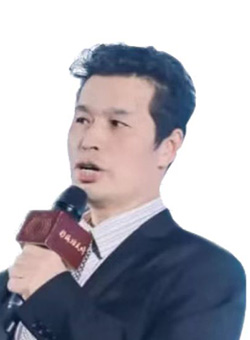
Dr. Fairtown Zhou Ayoungman, Professor
Yunus Social Business Center at Zhengzhou University, Zhengzhou University, Zhengzhou, China
Biography: Dr. Fairtown Zhou Ayoungman is the Director of Yunus Social Business Center at Zhengzhou University, Economics Professor and Doctoral Supervisor of Business School at Zhengzhou University, Chief Trainer at Conscience Entrepreneur Academy, MBA/EMBA Supervisor at Zhengzhou University, chief consultant of Ayoungman ThinkTank, independent director of listed companies, vice president of WangYangming Research Association in Henan Province, senior researcher at China Central Development Research Institute of Zhengzhou University, director of Pangdonglai Cultural Research Committee. Ayoungman has served as the CSO(Chief Strategy Officer) of Shanghai Hehui Group, CRO(Chief Risk Officer) of Beijing Dagong International Credit Rating Company, deputy director of Hebi State owned Assets Management Center (Municipal State owned Assets Supervision and Administration Bureau), deputy general manager of Hebi Economic Construction Investment Group (Government Investment and Financing Platform), etc. Ayoungman has published more than 10 academic books in China Economic Publishing House, Economic Science Press, Science Press, etc. Ayoungman has also published over 100 academic papers in SSCI, SCI, CSSCI, and ESCI journals, presided over more than 20 national and provincial level research projects, hosted over 30 enterprise consulting projects and government consulting projects, and taught over 200 enterprise training projects. etc.
Topic: SDGs Research on AI-driven Social Innovation, Institutional Entrepreneur, and Rural Revitalization
Abstract: China's Rural Revitalization Strategy is increasingly recognized not merely as a domestic development program but as a social innovation strategy with direct leverage across the UN 2030 Agenda (SDGs) — particularly SDG 1 (No Poverty), SDG 2 (Zero Hunger/Food Security), SDG 8 (Decent Work), SDG 10 (Reduced Inequalities), and SDG 15/12/13 (Ecological Integrity). This paper focuses on artificial intelligence (AI) as a core enabler of rural social innovation, with a specific focus on the pivotal role played by institutional entrepreneurs throughout the process. Building on institutional capital theory and social innovation scholarship, the study draws on empirical evidence from rural practices across China to map the transmission pathways of AI-driven social innovation for rural revitalization, and unpacks how institutional entrepreneurs facilitate technology diffusion, resolve institutional frictions, and coordinate multi-stakeholder resources to align local development with SDG priorities. This paper argues that the recent earth-shaking upgrade of social strategy is driven less by hardware alone than by AI-infused social innovation: precision/sensing systems, algorithmically coordinated supply chains, digital finance and tele-health, and data-driven public service delivery that compress the urban–rural capability gap. Yet technology diffuses unevenly unless institutional entrepreneurs — rural cadres, social enterprises, cooperatives, platform-builders, and hybrid public–private intermediaries — deliberately rework rules, incentive structures, and trust architectures to make AI socially embeddable. Drawing on institutional theory and social innovation studies, the paper develops a framework linking AI-enabled innovation → institutional entrepreneurial agency → new rule–resource configurations → rural revitalization outcomes, and illustrates it with contemporary Chinese cases (digital agriculture, rural e-commerce ecosystems, county-level tele-medicine/education, and carbon-inclusive eco-rural models). The contribution is twofold: (1) it conceptualizes rural revitalization as a co-produced sociotechnical achievement rather than a purely technocratic or purely redistributive one; and (2) it shows how AI-driven social innovation, steered by institutional entrepreneurs, can turn SDG alignment into an endogenous, scalable dynamic rather than a donor-led checklist — offering both theoretical traction and policy-relevant implications for Global South contexts.
2026 11th International Conference on Economics, Management and Social Sciences (ICEMSS2026) sincerely invites specialists and scholars to join the conferences and become the keynote speakers.
Benefits of Keynote Speakers
1. Attend the conference for free
2. Publish a paper free of charge
3. Free meals during the conference
4. Free one-day tour of Qingdao
5. Official certificate of keynote speaker.
Experts with doctoral degrees and associate professor titles or above will be preferred as keynote speakers. If you are interested in becoming a Keynote Speaker, please make an application either way in the following.
If you only have a primary idea about the keynote speech, you can fill in your personal information in advance.
If you have a clear topic about the keynote speech you would like to deliver, please click here to download the proposal form and submit your application package to keynotespeaker@conference123.net
Your application package should include following documents:
1. A completed proposal form
2. Your curriculum vitae
© Copyright 2015-2026 11th International Conference on Economics, Management and Social Sciences - All rights reserved.

 X (formerly Twitter)
 LinkedIn